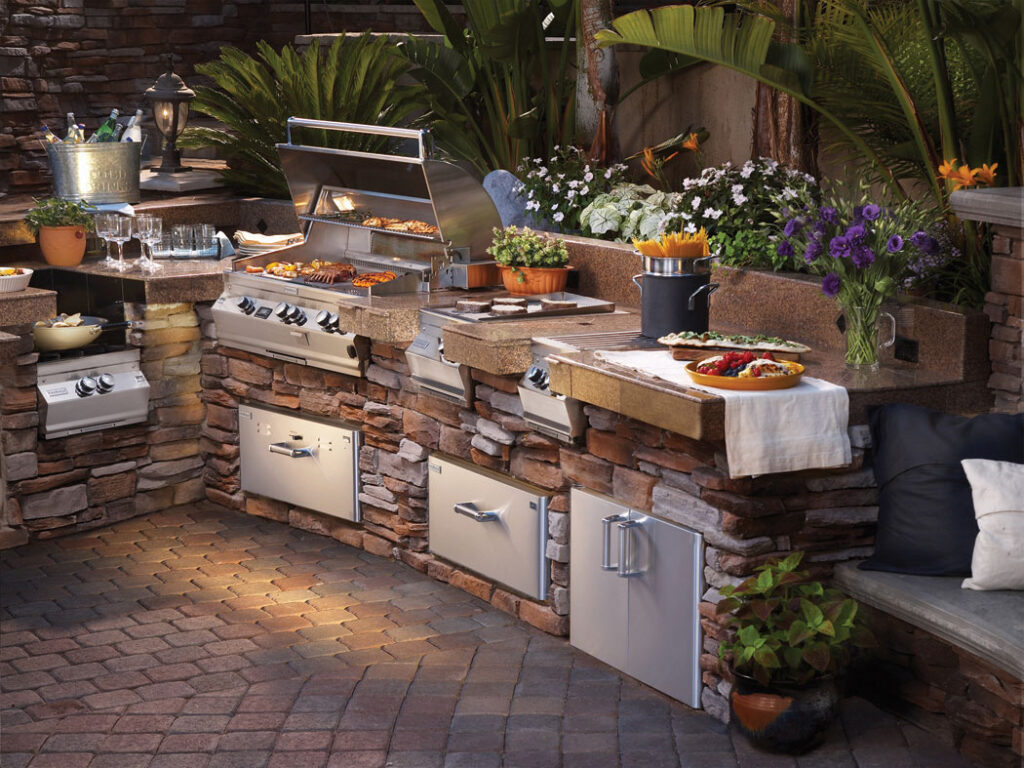
You didn’t spend $4,000 on a Blaze built-in or $6,000 on a Lynx to watch it rust out in 5 years. But without understanding how Florida’s Gulf Coast environment attacks outdoor cooking equipment — and without the right maintenance response — that’s exactly what happens. Across Bradenton, Sarasota, Lakewood Ranch, and every coastal community from Anna Maria Island to Siesta Key, the combination of salt air, humidity, and year-round use creates the most demanding outdoor appliance environment in North America.
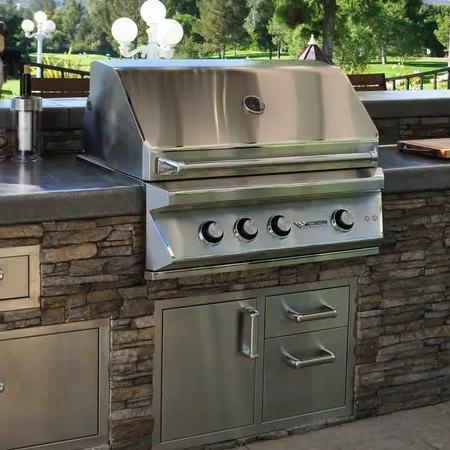
How Salt Air Actually Damages Your Grill
Chloride-Induced Pitting Corrosion
Stainless steel resists rust through a passive oxide layer — a microscopically thin film of chromium oxide that forms naturally on the metal’s surface. This layer is what gives stainless its corrosion resistance. Chloride ions from salt air attack this passive layer directly. Once a pit forms in the oxide layer, the underlying steel is exposed and corrodes rapidly — and the corrosion spreads laterally under the still-intact surrounding oxide layer, creating pits that grow larger from the inside out.
On a grill, this process is accelerated by heat cycling, grease contamination, and mechanical damage from improper cleaning.
The Grease Interaction
Grease and salt air form a particularly corrosive combination. Cooking fat that accumulates on stainless steel surfaces undergoes oxidation and hydrolysis in Florida’s heat and humidity, producing organic acids. These acids combined with chloride ions from salt air create a synergistic attack on the passive layer that’s significantly more damaging than either factor alone.
Your Between-Clean Maintenance Routine
After Every Cook
- Burn off residue by closing the lid and running on high for 10 to 15 minutes after cooking.
- Wipe down exterior stainless surfaces with a damp microfiber cloth, then dry completely. Removing surface salt deposits immediately after each cooking session prevents them from sitting against the metal.
- Never leave a grill uncovered after cooking in a coastal environment.
Monthly
- Inspect the drip tray and empty it if significant grease has accumulated.
- Check the burner ignition ports for spider webs — a common issue in Florida where spiders find the small ports an attractive nesting site.
- Wipe down all stainless surfaces with a quality stainless steel cleaner applied with the grain.
Every 3 to 6 Months — Professional Service
Between-clean maintenance slows deterioration but doesn’t replace professional service. Professional cleaning removes the grease, carbon, and salt deposits that accumulate in areas you can’t reach with standard tools — inside burner tubes, beneath heat shields, in the grease management system, and in the deep crevices of the firebox.
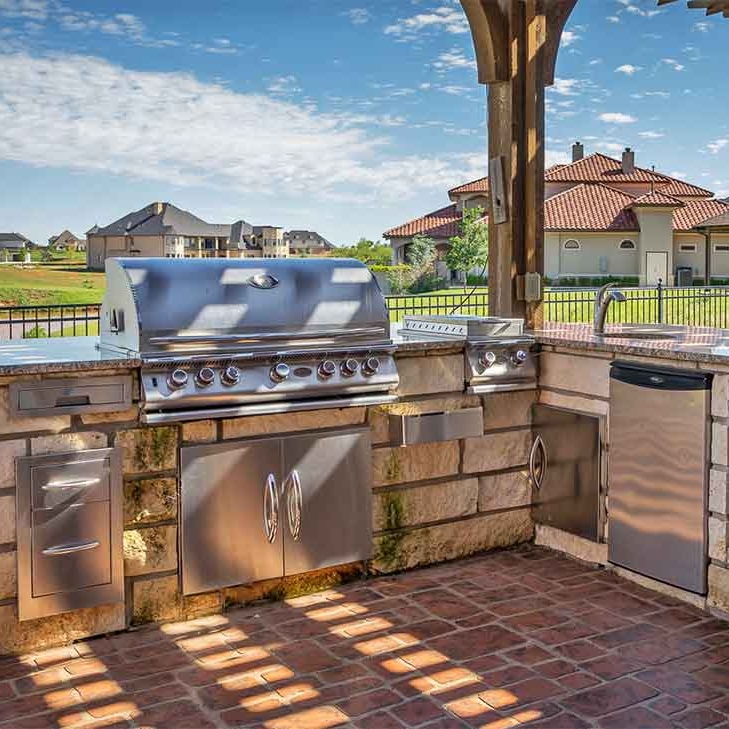
Which Grill Brands Hold Up Best in Florida’s Coastal Climate?
- 304 stainless steel (commercial grade): Used in Lynx, Viking, Alfresco, Fire Magic, and other premium brands. Contains 18% chromium and 8% nickel, providing the best corrosion resistance available in standard grill construction. The right choice for coastal Florida.
- 316 stainless steel (marine grade): Contains added molybdenum for superior chloride resistance. The best option for beachfront properties on Siesta Key, Longboat Key, or Anna Maria Island.
- 430 stainless steel: Used in most consumer-grade grills (Weber, Char-Broil, many big-box brands). Provides reasonable corrosion resistance in dry inland climates but performs poorly in Florida’s salt air environment.
The Real Cost of Deferred Maintenance
A neglected grill over 10 years: burner replacement at year 4 ($300 to $600), grate replacement at year 5 ($200 to $500), firebox rust treatment at year 6 ($200 to $400), potential controller or ignition failure ($200 to $500). Estimated total repair cost: $900 to $2,000 plus cosmetic deterioration.
A professionally maintained grill over 10 years: 20 professional cleans at $360 to $380 each = $7,200 to $7,600. Zero component failures attributable to corrosion or grease buildup. Grill in like-new condition at year 10.
Schedule Your Gulf Coast Grill Maintenance
Xtreme Grill Clean provides professional grill and outdoor kitchen cleaning across Bradenton, Lakewood Ranch, Sarasota, Parrish, Palmetto, Ellenton, University Park, Anna Maria Island, Holmes Beach, Longboat Key, Siesta Key, and Cortez. Owner Mike Potts personally handles every job and has been maintaining Gulf Coast grills since 2018.
Sign up for maintenance reminders when you book. Get a free quote at xtremegrillclean.com/quote.
Ready to book your clean?
Get a ballpark price in under 60 seconds. Mike responds within 24 hours.